
Arthritis and replacement
Glenohumeral arthritis and shoulder replacement
In arthritis the cartilage in the shoulder joint has worn away. That causes pain and stiffness which gradually increase. A replacement is the last step in that process, not the first.
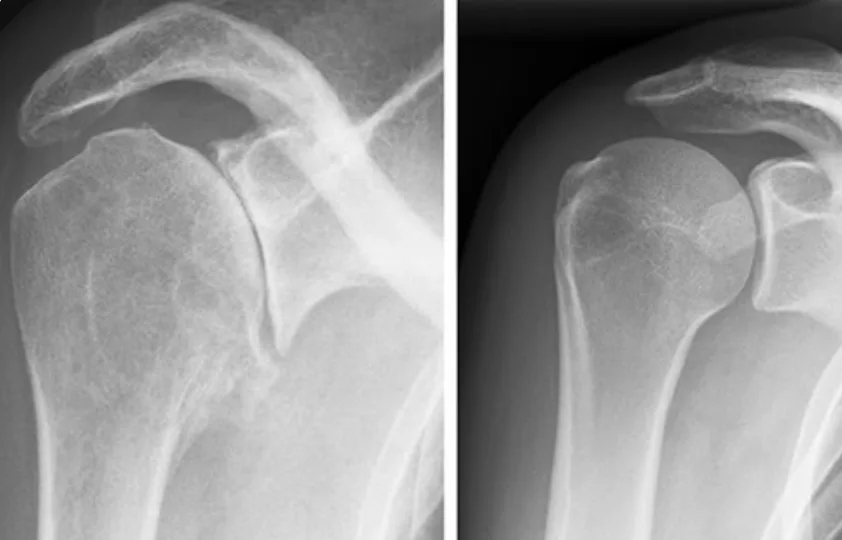
What is it?
Cartilage is the smooth layer that lets bone glide over bone. Once that layer wears away, bone rubs against bone and the joint becomes painful and stiff. Rims of bone can form around the joint that restrict movement further.
Arthritis of the shoulder is less common than arthritis of the hip or knee. It can develop with age, after an old fracture or dislocation, or after years of damage to the rotator cuff.
Symptoms
- Deep, nagging pain in the shoulder, including at rest and at night
- Increasing stiffness; lifting the arm or reaching behind your back becomes difficult
- A creaking or grating sensation when rotating the arm
- Symptoms that gradually worsen over months to years
Examination
A plain X-ray is usually enough to establish arthritis and gauge how advanced it is.
If we are considering a replacement, we take a CT scan. That shows the shape and the wear of the socket, and allows the procedure to be planned in advance. We add an MRI scan when we also want to know the state of the tendons, because that determines which type of replacement is suitable.
Treatment without surgery
Arthritis cannot be reversed, but the symptoms can be eased. Many people manage well that way for a long time.
- Painkillers, in consultation with your GP
- Physiotherapy, to maintain movement and the surrounding muscles
- Adjusting movements that load the shoulder heavily
- An injection into the joint, for temporary relief
Surgery
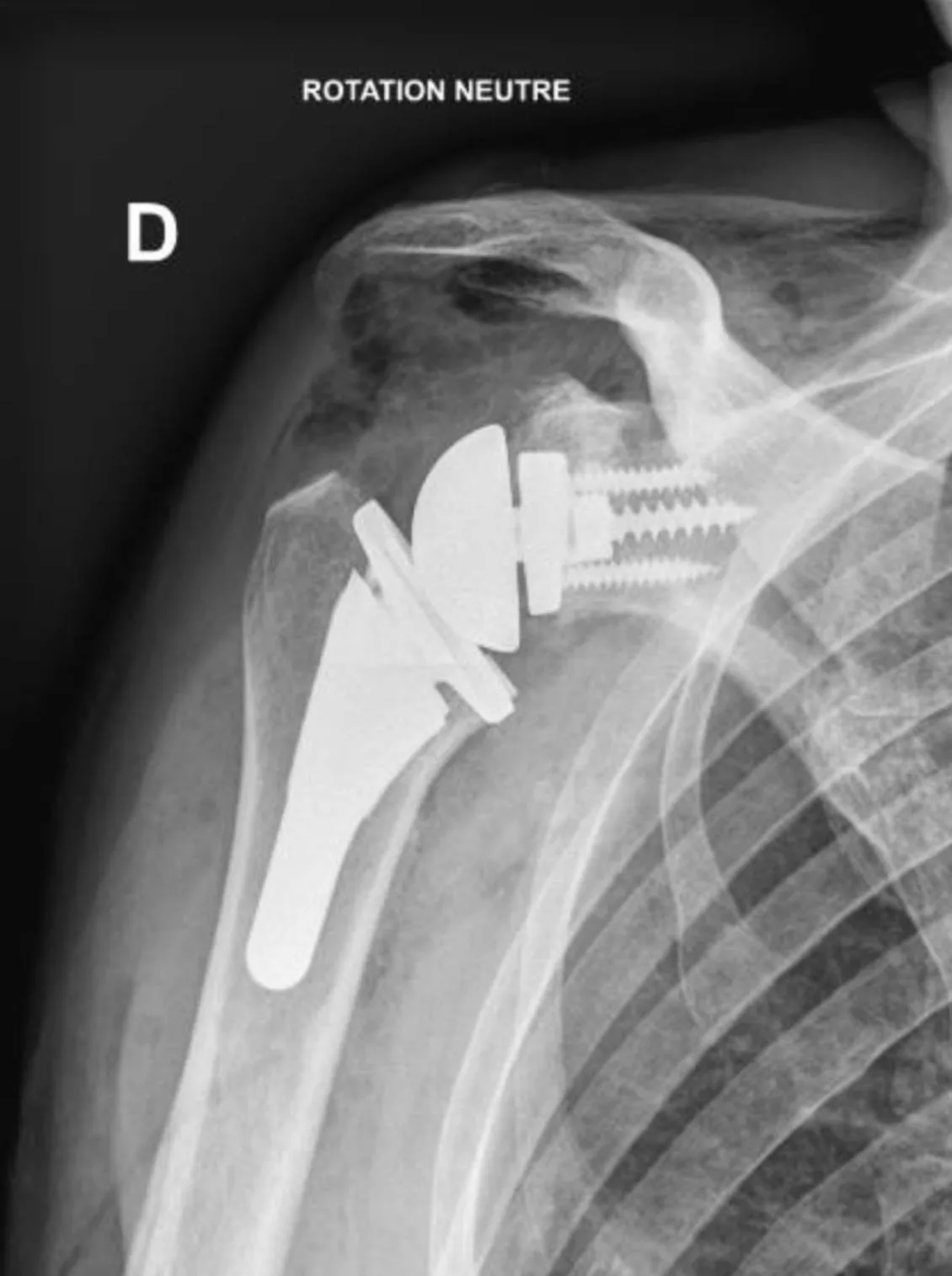
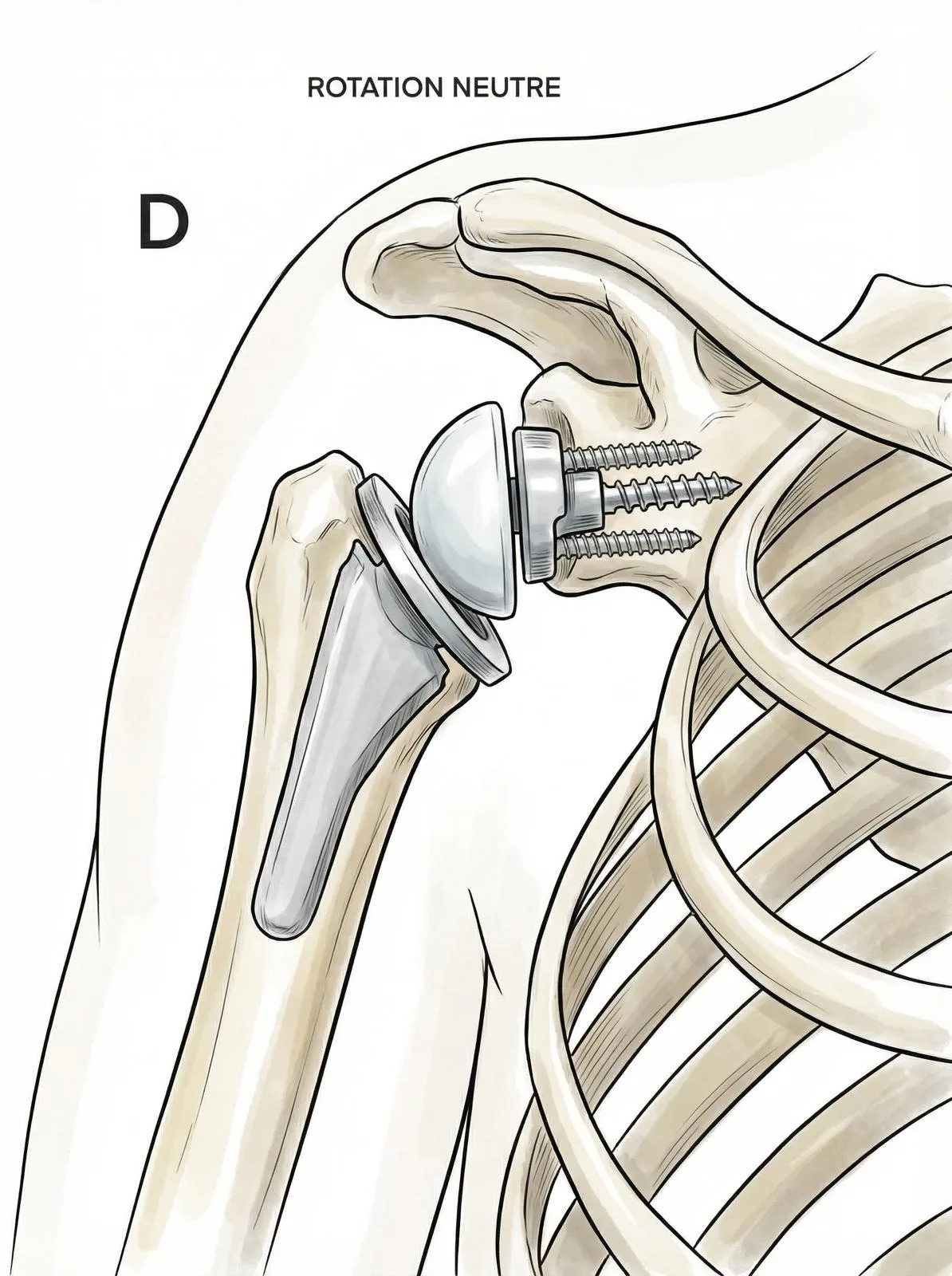
When pain keeps dictating daily life and night rest, a shoulder replacement is a good solution. The worn joint is then replaced by an artificial one.
There are two types. An anatomical replacement mimics the normal shoulder and requires intact rotator cuff tendons. A reverse replacement swaps head and socket around so that the deltoid muscle takes over the work; we choose that one when the tendons are worn or torn. Which replacement suits you is decided on the basis of the scan.
Recovery and rehabilitation
You stay in hospital for a few days and then wear a sling for several more weeks. Physiotherapy starts shortly after the procedure.
The pain usually settles quickly; strength and the last degrees of movement come back more slowly. Allow three to six months for the final result.
When to refer
For GPs and physiotherapists
Refer on pain at rest and at night, on increasing restriction of movement, or when painkillers and physiotherapy are not helping enough. A recent X-ray is enough as a starting point.
Questions about your shoulder?
Discuss your symptoms at the consultation. You can see how to make an appointment per surgeon and per location.
View the consultationsFor detailed medical information per condition, we refer to our website Orthoca.
More information via Orthoca.beOpens in a new tabThis information is only available in Dutch.